Bone graft and sinus lift in Turkey: building a base for implants
If a tooth has been missing for a while, the bone may be too thin or too low for an implant. Grafting and sinus lifts rebuild it. Here is when they are needed and when they can be avoided.
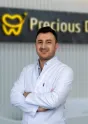 Medically reviewed by Dt. Hüseyin Yavuz Özbek, implant surgeon · Updated October 2026
A bone graft or sinus lift in Turkey at Precious Dental is only added when your 3D scan shows there is not enough bone for an implant. A bone graft is £150 per 1cc and a sinus lift is £350, and both are written into your plan before treatment. They are done under local anaesthetic, usually during your implant trips, though some cases need extra healing time before the implant goes in.
- Time in Antalya
- Usually within your implant stays
- Trips
- Usually the same 2 as your implants
- Anaesthetic
- Local; sedation by an anaesthetist on request
- Guarantee
- Lifetime on the implant and abutment placed
- Our price
- £150 per 1cc; sinus lift £350
Bone graft and sinus lift in Turkey are words that can make an implant plan sound much bigger than it is. At Precious Dental in Antalya they are only added when the 3D scan shows they are needed, and they are priced in writing before treatment. This page explains why bone goes missing, what grafting and sinus lifts actually involve, when they can be avoided, and what to expect afterwards.
Why the bone is not always there
A tooth root keeps the bone around it busy. When the tooth is lost, the bone that held it slowly shrinks, faster in the first months and then gradually for years. Gum disease, a difficult extraction, an infection or long years of wearing a denture all add to the loss.
For an implant, two measurements matter: the width of the bone, so the implant is surrounded on all sides, and the height, so it is long enough without touching anything it should not. In the lower jaw the limit is the nerve that gives feeling to the lip and chin. In the upper jaw, above the back teeth, the limit is the floor of the maxillary sinus, an air space in the cheekbone. When teeth there are lost, the sinus often expands downwards, leaving only a thin layer of bone.
Bone graft: adding width or filling a socket
A bone graft places bone-building material where bone is missing. It acts as scaffolding: your own bone grows into it over the following months and gradually replaces it. The material may be taken from elsewhere in your mouth or be a prepared grafting material made for dental use. The dentist explains which is planned and why.
Common uses include:
- Filling a socket right after a tooth is removed, to reduce the shrinkage that follows.
- Adding width to a thin ridge, often at the same time as placing the implant, with a membrane over the top to protect the graft while it heals.
- Repairing a defect left by infection or an old failed implant.
A review of grafts placed at the same time as implants found the technique reliably reduced exposed implant surface, which is why small grafts are a routine part of implant work. Grafts are priced by the amount of material used, measured in cubic centimetres.
Sinus lift: adding height in the upper back jaw
A sinus lift gently raises the thin lining of the sinus floor and places graft material underneath it, creating more height for an implant. There are two main approaches:
| Approach | How it works | Typically used when |
|---|---|---|
| Through the implant site | The lining is lifted from below, through the hole prepared for the implant | A moderate amount of extra height is needed |
| Side window | A small opening is made in the side of the jaw to lift the lining and fill the space | The bone is very low and more height is needed |
Systematic reviews of both techniques report high survival for implants placed with a sinus lift, which is why it has become a standard step rather than an unusual one. The main complication to watch for is a tear in the sinus lining, which the surgeon manages during the procedure.
When grafting can be avoided
Not every thin jaw needs a graft. Depending on your scan, the dentist may suggest:
- a shorter or narrower implant that fits the bone you have
- tilted implants that use the denser bone further forward, as in All-on-4
- zygomatic implants, anchored in the cheekbone, for a very low upper jaw, at £2,000 per implant
- a bridge rather than an implant, if neighbouring teeth already need crowns
Each has its own trade-offs, and the reason for the chosen route is written on your plan. All-on-4® is a trademark of Nobel Biocare; we are not affiliated with any implant maker.
How it works at our clinic
- Images from home Send a panoramic X-ray or photos. A dentist reviews them and flags whether grafting is likely, in a preliminary written plan with an itemised price. Nothing is paid yet.
- 3D scan on day one Our CBCT scan shows bone width and height and the position of the nerve and sinus. The dentist confirms in writing whether a graft or sinus lift is needed.
- Surgery Under local anaesthetic, with sedation by an anaesthetist on request. In many cases the graft or lift is done in the same appointment as the implant.
- Healing The graft matures while the implant bonds. Upper-jaw healing commonly takes 4 to 6 months.
- Final teeth On your second trip the crown or bridge is fitted, and you receive your implant passport and copies of your scans.
If a large amount of bone must be rebuilt before an implant can be placed, the implant may have to wait for the graft to heal. Your plan will say so before you travel. Read how it works for the trip structure.
Recovery
Expect swelling and some bruising for several days, more after a side-window sinus lift. After a sinus lift, avoid blowing your nose forcefully, sneeze with your mouth open, and avoid flying for a short period if the surgeon advises it; ask before booking your return flight. Keep to soft food, do not smoke, and follow the written aftercare and medication we give you.
Risks and honest limits
- The graft may not take fully, leaving less bone than planned and sometimes needing a second graft.
- Infection of the graft site.
- Sinus lining tear during a lift, and occasionally sinus inflammation afterwards.
- Longer timelines when large grafts must heal before implants go in.
- Smoking and uncontrolled diabetes make graft healing less predictable.
Price
| Item | Our price |
|---|---|
| Bone graft | £150 per 1cc |
| Sinus lift | £350 |
| Zygomatic implant | £2,000 per implant |
| Dental implant | £300 per implant |
These are only charged if your scan shows they are needed, and they appear in your written plan before treatment. Implant stays include hotel nights and transfers; flights are not included. See prices.
Guarantee
The implant and abutment placed in grafted bone carry our lifetime guarantee, with a failed implant replaced once free of charge. Hygiene, check-ups and a night guard for grinders are conditions, and accident damage is excluded. Guarantee work is done in Antalya with the hotel provided for the treatment period; you pay flights. Full terms are on our guarantee page.
Find out what your bone allows
If you have been told you need a bone graft, send us the X-ray or scan and a dentist will give you a written second view and price, free of charge. Use our contact page or WhatsApp. For the implant side, read dental implants.
Common questions
How do I know if I need a bone graft?
Only a 3D scan shows it reliably. A flat X-ray shows height but not width. We take a CBCT scan on day one and confirm in writing whether grafting is needed.
What is the graft made of?
Grafting materials can come from your own bone or be prepared materials designed for dental use. The dentist explains which material is planned for you and why, before treatment.
Does a sinus lift hurt?
It is done under local anaesthetic, so you feel pressure rather than pain. Afterwards swelling and some bruising are common for a few days. You must not blow your nose hard for a while.
Can I avoid grafting?
Sometimes. Shorter implants, tilted implants as used in All-on-4, or zygomatic implants can avoid a graft in some cases. Each option has trade-offs, and the dentist explains them on your scan.
Will grafting add a trip?
Often the graft is done at the same time as the implant. If a lot of bone has to be rebuilt first, the implant may have to wait, and your written plan will say so.
Sources
- Pjetursson BE et al. (2008) A systematic review of the success of sinus floor elevation and survival of implants inserted in combination with sinus floor elevation. J Clin Periodontol
- Tan WC et al. (2008) Sinus floor elevation: Part II, transalveolar technique. J Clin Periodontol
- Thoma DS et al. (2019) Efficacy of lateral bone augmentation performed simultaneously with dental implant placement: systematic review and meta-analysis. J Clin Periodontol
- British Society of Periodontology: Patient FAQs, dental implants
Checked October 2026. Where we give our own view as a clinic, we say so.
Get your treatment plan and price in writing
Send a few photos of your teeth or a recent X-ray. One of our dentists looks at it and you get an itemised plan before you book anything.